Below, you will find a sample of figures that I have designed/conceived during the past few years. Enjoy!
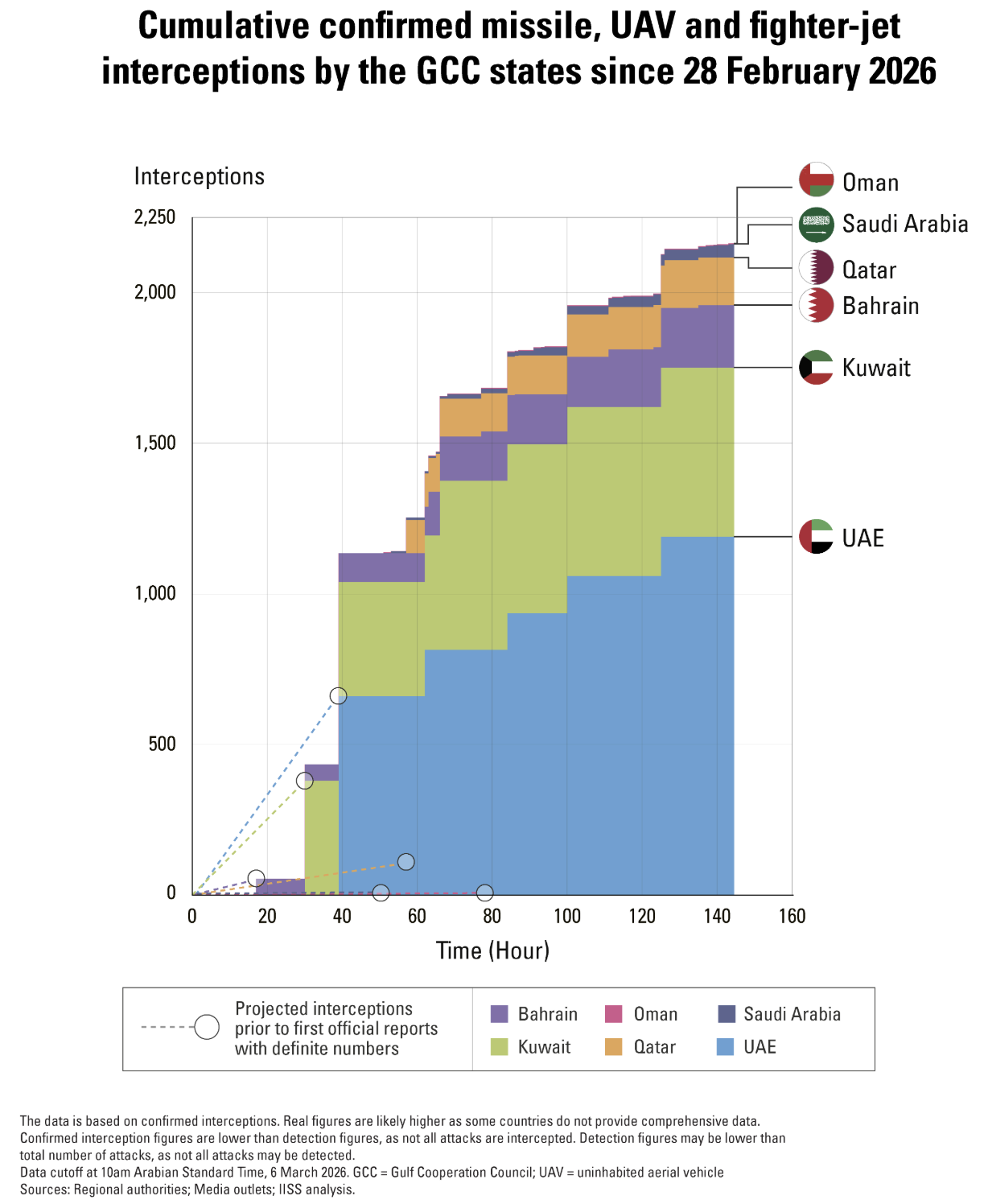
This figure is part of an analysis of cumulative confirmed missile, UAV and fighter-jet interceptions by the GCC states, published a few days after the beginning of the Iran war.
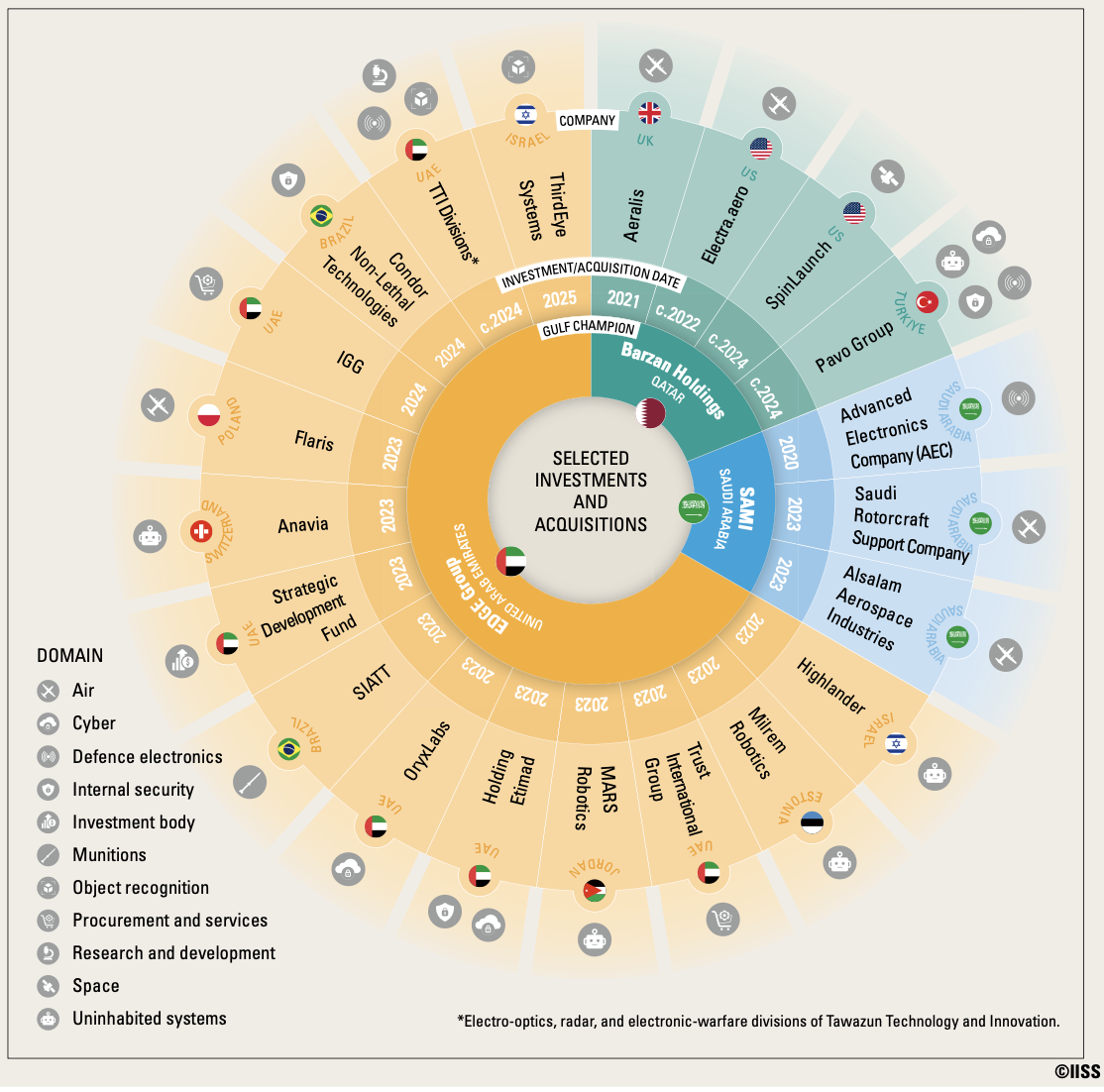
This figure is part of the Middle East chapter in the Military Balance 2026. It shows selected investments and acquisitions by Emirati, Saudi and Qatari national defence champions, from 2020 to 2025. Here’s an excerpt accompanying it:
Over the last five years, Arab Gulf defence champions have undertaken a series of mergers and acquisitions (M&A) and investments. By consolidating domestic companies, the likes of Saudi Arabia’s SAMI and the UAE’s EDGE Group hope to achieve better economies of scale more rapidly than would be possible through organic cluster formation, enabling them to be more competitive internationally. Acquiring foreign companies also provides them with specific technologies, know-how, market presence and orders.
EDGE has been, by far, the most active, acquiring and investing in companies both at home and overseas. Domestically, the company has absorbed all other state-owned defence firms – IGG, Trust and Etimad – as well as the Strategic Development Fund, a defence fund with investments in over 13 companies. EDGE also absorbed two R&D divisions from the now-defunct Tawazun Technology and Innovation. Internationally, EDGE has conducted at least eight targeted investments or acquisitions to accelerate the development of strategic technologies, including, electro-optics, uninhabited systems and missiles. These deals have focused on European firms but also include companies in Brazil and Israel.
SAMI has recently acquired several companies in the Kingdom – AEC in 2020 and Alsalam in 2023 – but has not made international acquisitions. Established in 1988 under Saudi Arabia’s offset programme (which required foreign defence suppliers to invest in the economy), these two firms have been subsumed into SAMI’s Electronics and Aerospace divisions.
Qatar’s Barzan Holdings has made minority investments in companies across the United Kingdom, the United States and Turkiye. However, the strategic value and impact of these investments on Qatar’s localisation ambitions remains unclear.
This figure is part of Chapter 1 of the Asia Pacific Regional Security Assessment 2025, which looks at defence industrial partnerships in the Indo-Pacific. The section I wrote (Bridging the Gulf) examines key drivers behind the UAE’s defence-industrial collaboration with Asian counterparts, legal and political challenges the UAE and Saudi Arabia face in those partnerships, and provides numerous examples in great detail.
This figure was also designed by the IISS Design team.

The figure below is part of a chapter I wrote on the economic impacts of the Red Sea crisis, as part of a broader report examining the consequences of the Houthi attacks and maritime disruption: Navigating Troubled Waters: The Houthis’ Campaign in the Red Sea and the Gulf of Aden. The figure was designed by the IISS Design team.
